Do you know how to recognise if your bowels are healthy?
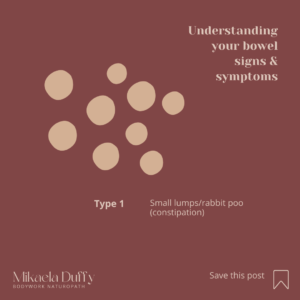
There is a thing called the Bristol Stool Chart to be able to gauge what your poop habits are saying about you.
As an example, the picture above refers to type 1, meaning the stool appearance is small lumps/rabbit poo (found when constipation is present), and are usually hard & dry.
There are many things you can explore to fix it, starting with the information below:
~Take magnesium supplements – I find the citrate form of magnesium is best due to its ability to help the bowels move – around 300-400mg daily is a good dose to start with.
~Try more fermented/probiotic foods eg miso, sauerkraut, kefir, yoghurts & kombucha in your daily diet.
~Drink more hydrating fluids eg water, herb teas & mineral water (coffee and black tea are dehydrating to the body so you need to increase your water to compensate if you do drink them).
~Manage your stress – in the best ways you can! Exercise, counselling, herbal medicine and making space for fun are all a good start, but of course it is different for everyone and isn’t always a simple solution.
~Potential thyroid issue – this would need support from a practitioner to explore this further so seek help if you have a history of thyroid conditions in your family, or have reason to believe your thyroid might be an issue. Even if you have had tests with your GP and told your thyroid is ‘fine’, you might benefit from a full profile which will give much more information on how this delicate gland is really behaving!
~Increase veggies & fruits – add handfuls of greens, alfalfa & salads to meals, or some zucchini to your smoothie. Basically try to bring colour to each meal you eat and have 2-3 serves of fruit each day – whatever ways you can increase veggies and fruit, do it.
~Get moving! Exercise will encourage healthy bowel transition and emptying to ease constipation – even walking is often enough, its more about consistency and helping the gut motility through movement on a regular basis.
Would you like to learn more about this and other body signs and symptoms that give you clues about your health?
My Cycles in Harmony online course provides you with so many ways to help you get to know YOU better. The content is yours for life, and includes blood test cheat sheets, bowel & period health charts, and key information on herbs, supplements and lifestyle hacks to get in your own best place.
Learn more here, or contact me if you would like to discuss my services further.
Website by 